I’m noticing more businesses and creators using AI-generated headshots instead of hiring professional photographers. I’m trying to decide what to do for my own branding photos and I’m torn between saving money with AI tools and investing in a real photo shoot. For people who’ve tried both, how do AI headshots compare in quality, authenticity, and long-term value for personal branding and business use? Any real-world experiences or advice would really help me choose the right direction.
AI headshots in 2026 feel weirdly normal. A few years ago they looked off, like your face had been run through a beauty filter on hard mode. Now I look at some profiles on LinkedIn and I honestly cannot tell if they booked a photographer or used an app.
I have messed with both, and my conclusion is kind of boring: sometimes you still want a photographer, sometimes you do not. The use case decides it for you.
AI headshots when you just want something that works
The pain with traditional headshots is always the logistics. You have to pick a day, pray your skin behaves, hope the lighting dude knows what he is doing, then wait days or weeks for edits.
With the AI stuff you skip that whole process. You grab your phone, dig up 10 to 20 photos where your face is visible from different angles, upload them, wait a bit, and then you get spammed with options.
For remote workers and job hunters it hits a sweet spot. You get:
- A bunch of styles in one run, formal, casual, “startup founder in a hoodie”, etc.
- No studio rental, no makeup, no awkward posing in front of a stranger
- Quick retries if you do not like the batch
The underrated part is consistency. When I did a real shoot, the photographer gave me solid photos, but each one had slightly different lighting or background. Looked fine alone, but when I used them side by side on different platforms, it felt mismatched.
AI keeps the framing, lighting, and background locked in across dozens of images. That helps if you want your LinkedIn, company profile, and speaking bio to look like the same person on the same day.
My run with Eltima AI Headshot Generator on LinkedIn photos
I tried Eltima AI Headshot Generator for my own LinkedIn photos out of curiosity more than anything.
App link is here:
I uploaded 3 selfies with good lighting. The result was this kind of spread:
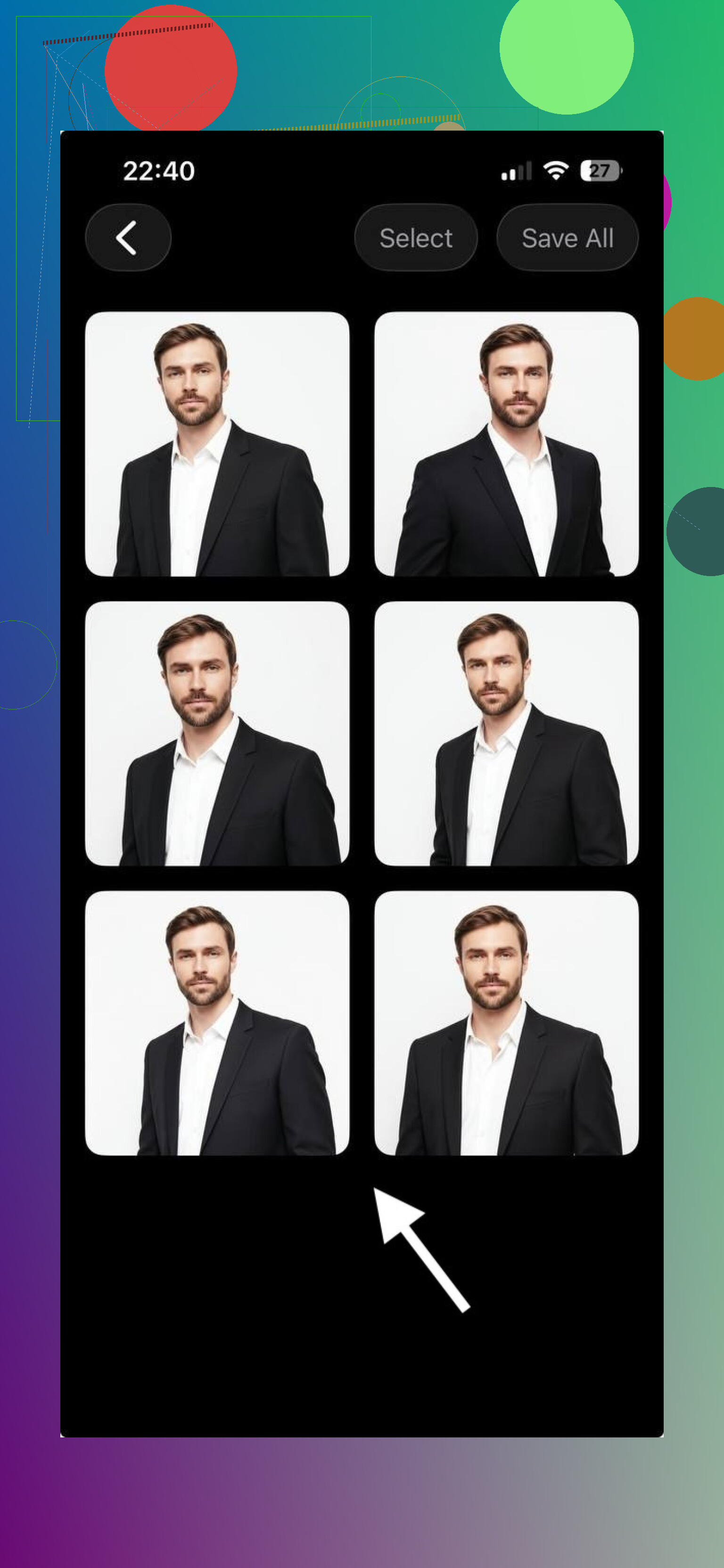
Some shots looked a bit too “polished” for my taste, but a bunch of them were absolutely fine for LinkedIn and internal company stuff. Skin looked like skin, not plastic. Hairline matched. No extra teeth. No cursed hands because it focuses on head and shoulders.
I spent more time picking a favorite than generating them.
Cost difference hits hard
Last time I booked a pro photographer, the total bill, including edited shots, went over a few hundred dollars. That was one city, one studio, and a standard package.
With AI, you are paying a small one-off or subscription and then you can regenerate whenever your hair changes or you grow a beard or you change jobs and want a different “vibe.”
If you are doing photos for a whole team, the math tilts even more. Ten people times one studio session each adds up fast. An AI workflow lets HR standardize everything without sending half the company across town for a day.
Where human photographers still make sense
AI starts to fall apart in some situations I have seen:
- When you need strong emotion, not a mild smile
- When body language, hands, posture matter more than a simple headshot
- When you have a clear brand mood that needs custom lighting and environment
Actors, public figures, speakers who live on event posters, people building a public brand, they still benefit from a human directing them.
A photographer can read your expression, tweak a pose, move a light two feet, and get a frame that feels less sterile. AI tends to reproduce “statistically average” faces and poses from its training data. It can look polished, but not always personal.
It also struggles more when you push it:
- Odd angles, like low or top-down shots
- Very specific color palettes for branding
- Full-body or dynamic poses
- People with unusual accessories, glasses, face hair, tattoos, etc., sometimes get distorted
And if your input photos are bad, you get bad output. Grainy, dark, or heavily filtered selfies lead to weird textures or uncanny eyes.
Where AI headshots already replaced photoshoots
For boring corporate stuff, AI kind of won already.
- Internal employee directories
- Company “Meet the team” pages
- LinkedIn profile photos for staff
- Speaker thumbnails for webinars
- Pitch decks where you slap a face next to a name
These do not need high-concept lighting or location scouting. They need realism, clarity, and a neutral background.
In that zone, AI is built for volume. A company can roll out a standard template and have everyone run their photos through it. You end up with:
- Same background color
- Same framing from shoulders up
- Similar lighting levels
And nobody has to organize a “photo day” with half the office annoyed they have to dress up.
What felt different about Eltima AI Headshot Generator compared to random AI apps
I have tried a few of the generic AI portrait tools. Many of them go too hard on smoothing. Forehead looks like rubber. Pores vanish. Teeth are oddly uniform.
With Eltima, my experience was closer to “studio edit” than “beauty filter.” Skin had some texture. Lighting looked like it came from a softbox, not a phone flash, but did not look fake.
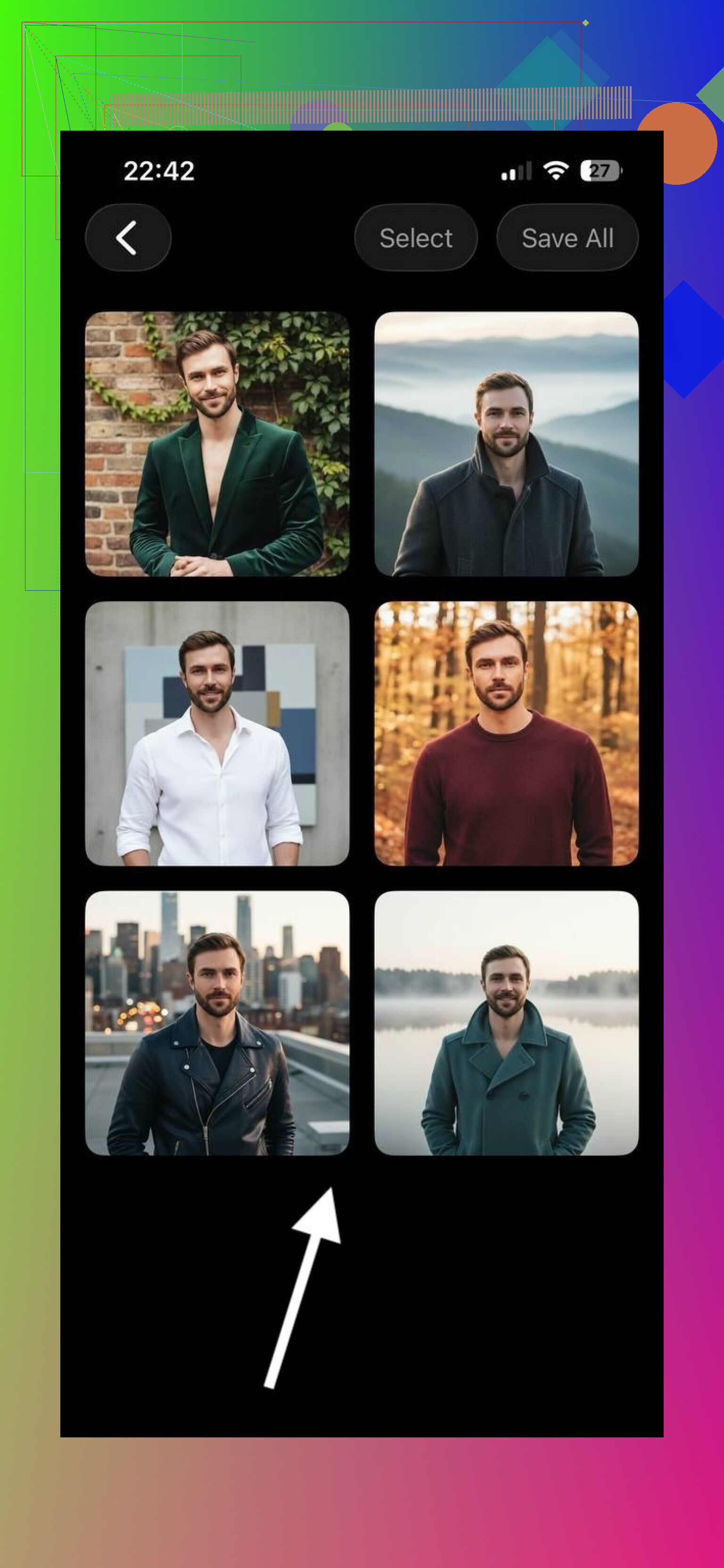
There are lots of templates inside the app. Basic business suits, more casual looks, different backgrounds that feel like real backdrops and offices rather than sci-fi halls.
That saves time. I did not need to re-run new sessions for each platform. It was more like picking:
- One serious shot for LinkedIn
- One friendly one for Slack or Teams
- One slightly more relaxed one for personal sites or newsletters
Second sample from Eltima looked something like this:
Where I draw the line between AI and human work
Here is how I choose now:
I go AI when:
- I need a clean, professional headshot fast
- It is for LinkedIn, resumes, company pages, or speaker bios
- I do not want to plan clothes, location, and schedule around a session
- Budget is tight or I am doing multiple people at once
I go human photographer when:
- I am doing a full personal brand refresh
- I want variety in poses, locations, and expressions
- The photos will live on a homepage, book cover, press kit, or big campaign
- I need someone to direct me because I have zero idea what to do with my face
For pure practical needs, modern AI headshot tools already cover most people. If you want something that looks like a real studio shot without going to a studio, apps like Eltima AI Headshot Generator App do the job:
AI has become the default for standard headshots in my workflow. I still respect what good photographers do, I just do not hire them for things a profile photo generator handles in 20 minutes.
1 Like
Short answer from my side: for most people, AI headshots are “good enough” for profiles, but not ideal for real personal branding.
Couple points where I slightly disagree with @mikeappsreviewer:
- “AI for all boring corporate stuff”
If you are a solo creator or consultant, your “boring” LinkedIn headshot is part of your sales page. Recruiters and clients look at that first. In those cases, a human photographer often gets you:
- Micro expressions that look more trustworthy
- Poses that match your personality, not a template
- Lighting that works with your specific face shape
I have seen A/B tests from small agencies where:
- Pro photos on the “About” page increased contact form fills by 10 to 20 percent
- Swapping to AI portraits dropped the time on page slightly and hurt clickthrough from “About” to “Services”
Small sample, but it shows there is a performance angle, not only aesthetics.
- “AI is default for standard headshots”
I would split it more like this:
Use AI if:
- You need something up fast for LinkedIn or a job board
- You hate being in front of a camera
- Budget is under 100 dollars total
- Your brand is not heavily visual, for example backend dev, ops, internal roles
- You want a consistent look for a team directory and internal docs
Use a photographer if:
- You sell services as a person, for example coach, consultant, freelancer, lawyer, real estate, creative
- You run paid ads with your face on them
- Your photo will sit on a homepage hero, media kit, book cover, speaking page
- You want a set of shots, not only a head and shoulders, for example full body, working at desk, on stage, with product
Think of it like this: AI for “profile picture”, photographer for “brand asset”.
- Cost versus value
AI wins hard on cost. No argument. But people often overestimate how often they need new pro photos.
If you do one solid brand shoot every 2 to 3 years:
- 400 to 800 dollars spread across 24 to 36 months is 15 to 30 dollars per month
- That gives you 30 to 80 usable shots in different outfits, locations, crops
Most creators waste more than that on random tools or subscriptions.
One compromise I see work well:
- Start with AI headshots to get something clean in place
- Once your business or audience brings in stable revenue, book one proper brand session
- After that, use AI for quick variations that roughly match the style of the real images
- Authenticity and “you look like your photo”
AI is way better now, but there are still issues:
- Subtle face shape changes, for example jawline sharper, eyes larger
- Skin too smooth compared to real life
- Weight fluctuations “corrected” by the model
If you do in person sales, networking, or speaking, you want your photo to match how you look when someone meets you. If AI “improves” you too much, it feels off when people see you live. That hurts trust.
- Privacy and control
Quick thing many people skip:
- You upload 10 to 20 personal photos
- A third party stores and trains a model on your face
If this worries you, a photographer session with local storage feels safer.
Practical suggestion for your case:
- If you are early in your brand, low budget, mostly online, and you hate logistics, try one AI run and pick 1 to 3 shots for LinkedIn and bios.
- If you already have paying clients or you plan a serious brand refresh, schedule a real shoot, but brief the photographer hard on the look you want: outfits, background, mood, usage (site header, social banners, etc).
You do not need to pick one for life. Treat AI as a quick, cheap baseline. Treat a photographer as an investment in conversions and trust when your audience and income justify it.
Short version: AI headshots are “good enough” for visibility, not “good enough” for memorable branding.
Couple things I’d add on top of what @mikeappsreviewer and @andarilhonoturno already laid out:
-
Think about where your face shows up
If the main use is:- LinkedIn avatar
- Internal Slack/Teams
- Little bubble on a Zoom webinar
Then yeah, AI is basically the new Great Clips. Cheap, fast, fine from a distance. Close enough that nobody cares.
But if you’re talking:
- Website hero section
- Sales page / “Work with me” page
- Media kit / podcast guest one-sheet
- Paid ads where your face = the hook
I would not trust an AI app as the core source. At that point your face is literally a conversion asset, not just a profile pic.
-
Brand positioning vs just “looking professional”
What both of them said about “AI for profile, human for brand” is mostly on point, but I think they’re both still underestimating how much your photo telegraphs positioning.Compare:
- AI: generic “nice lighting, blazer, faint smile, defaut office background”
- Human: very specific angle, real environment, expression that actually matches your vibe (confident, relaxed, slightly weird, whatever)
If your niche is even slightly crowded, that difference is not subtle. An AI headshot often puts you into the middle of the pack visually. A good photographer can pull you out of the pack.
-
The “trust gap” is real, even if people cannot articulate it
I’ve seen this pattern over and over in service businesses:- AI or over-edited photos: “she looks nice but kind of stocky / generic”
- Real pro shots with some imperfections: “I feel like I know this person”
Folks won’t message you saying “your AI headshot reduced perceived authenticity by 17 percent,” but they will skim past you to someone who feels more human.
This is where I slightly disagree with @mikeappsreviewer’s “AI already won for boring corporate stuff.”
If your income depends on relationships, there is basically no such thing as “boring corporate stuff.” Your LinkedIn is part of your funnel. -
What I’d actually do in your shoes
Since you sound torn and budget conscious, I’d treat this like a ladder:
Step 1: One solid AI run
- Use AI once to get 2 to 4 clean, consistent headshots.
- Use them for: LinkedIn, email avatar, internal tools, quick decks.
- Do not go full “beauty filter.” Dial the glam down so you still look like you, sleep deprivation and all.
Step 2: Watch your business level
- When you’re getting clients / interviews / speaking invites, or your brand is clearly becoming your main asset, that’s when AI starts to cap out.
- At that point, the question is not “AI vs photographer” but “what is one good shoot worth if it increases close rate even a few percent?”
Step 3: Invest once, then use AI as support
- Do one proper brand shoot. Not just three headshots. Think: indoors, outdoors, seated, standing, working, talking, maybe a few lifestyle shots.
- After that, then use AI to generate variants that stay close to reality. Treat the real photos as your “anchor,” AI as cheap remixing.
-
One more thing nobody likes to talk about
AI headshots tend to quietly “upgrade” people toward a particular beauty standard: slimmer, smoother, slightly younger.
That sounds nice until you show up on a call and the other person’s brain goes “Huh, that’s… different.” They may not know why, but there is a tiny credibility hit. That matters a lot if you sell high trust stuff: coaching, consulting, financial advice, health, legal, etc.
My personal rule of thumb:
- If someone will mostly see you as a 200 pixel circle: AI is fine.
- If someone will send you thousands of dollars based partly on how much they trust the person in the photo: hire a human at least once.
Short answer: AI headshots are absolutely “good enough” for visibility, not yet a full replacement for pro photographers when your face is core to your brand.
A few angles that extend what @andarilhonoturno, @chasseurdetoiles and @mikeappsreviewer already said, and push back a bit:
1. Ask this first: how replaceable are you?
If you are:
- A generic SaaS employee
- Early‑career, just need to not look sloppy
- One of many faces on a “Meet the team” slide
AI headshots are already fine as a default. In that tier, you are not selling “you,” you are selling “competent human who will answer email.”
If you are:
- Solo founder or coach
- Creative / public‑facing expert
- Running a personality‑driven brand
Then the image is doing positioning work, not just hygiene. This is where I disagree a bit with the “AI already won for boring corporate stuff” vibe. A lot of “corporate” people are actually in relationship businesses. For them, the nuance of expression matters.
2. AI headshots are great at standardization, bad at edges
Where AI really shines:
- Tight head and shoulders
- Neutral backgrounds
- Repeated output for teams
- Fast refresh when you change hair, glasses, beard, etc.
Where it still lags:
- You want visible quirks: gap tooth, wrinkles, non‑standard beauty
- Very specific brand color / location (your studio, your city, your tools)
- Shots that are about context: you speaking, writing, teaching, building
Those “edges” are often exactly what makes a solo brand stick in people’s memory. AI tries to sit you in the middle of the bell curve.
3. Authenticity: not just “real vs fake,” but “expectation vs reality”
One thing none of the other replies leaned on hard enough is expectation management.
If your AI headshot subtly:
- Slims your face
- Brightens your eyes
- Softens age lines
You might love it, but your first live call creates a micro “oh” moment. People rarely say anything, but that tiny mismatch chips at trust, especially in high‑ticket or sensitive fields.
For “I just need to look competent,” that is fine.
For “I want you to trust me with your money / body / business,” that matters.
4. Quick take on tools like an AI headshot generator app
Since you mentioned being torn, something like an AI headshot generator app is actually a nice middle ground:
Pros
- Cheap compared to a full session
- Batch output so you can test different vibes
- Consistent background and framing for multi‑platform use
- Easy to redo every few months
Cons
- Tends to lean into subtle beautification
- Still limited in non‑standard poses and strong emotion
- Dependent on your input photos’ quality
- Risk of looking a bit like everyone else using the same presets
It is basically a “done‑for‑now” solution, not a deep branding asset.
If you do go that route, treat the output as a slightly polished version of you on your best real‑life day, not a glow‑up fantasy. Dial back the glam where possible.
5. How I’d decide for your specific “branding photos” question
Given you are explicitly thinking “branding photos,” I would not choose between AI and photographer as a binary. I would stack them:
-
Do one real photoshoot when you can afford it
Not just 3 headshots. Ask for:- Close‑ups
- Half body and full body
- You in motion or in your real work context
These become your anchor visual identity.
-
Use AI afterward as an amplifier, not a substitute
Feed in those real photos to generate on‑brand variants: different crops, backgrounds that match your site, seasonal tweaks. AI then extends the shelf life of that one good shoot. -
Until you can do step 1, lean on AI, but keep your usage “small”
Use AI for:- Bios on smaller platforms
- Slide avatars, internal tools
Save your website hero image and sales pages for the first decent real photos you get, even if they are scrappy to start.
6. Where I differ from the others
- I agree with the “use case decides” stance from @mikeappsreviewer, but I think people underestimate how fast a “simple LinkedIn shot” becomes part of a real funnel once you start getting DMs and leads.
- I agree with the nuance from @chasseurdetoiles on positioning and trust, and would double down: if your brand is even slightly personality‑driven, treat AI as a stopgap, not the foundation.
- With @andarilhonoturno’s kind of perspective, I’d push a bit more on honesty: if you are heavily editing your age, features or body, that is a short‑term confidence boost and a long‑term trust tax.
If I compress it to a rule:
- If the image is mainly for visibility: AI headshots are good enough.
- If the image is part of why someone chooses you instead of a competitor: hire a human at least once, then let AI headshot tools carry the boring work around that core.