I accidentally deleted important videos from my GoPro before backing them up, and now I’m trying to figure out if there’s any way to recover the footage from the SD card. I need help with the best GoPro deleted footage recovery steps or software because these clips are really important and I’m worried they may be gone for good.
I’ve been in this spot, and it sucks fast. You get home, plug in the GoPro, and the clips you cared about are missing. The main thing is this, if the videos were deleted or the card got formatted, recovery still works pretty often. The first moves matter a lot.
First, stop touching the card
If you want the best shot at getting the footage back, stop using the SD card right now.
Don’t shoot more video on it. Don’t format it again. Don’t run random repair tools. On most SD cards, deleted footage is not gone at once. The file listing disappears first, while the video data often stays there until new data lands on top of it.
I’d check a few boring things before doing anything heavier:
- Open your GoPro cloud account if you pay for it and had Auto Upload on.
- Look in Trash or any Recently Deleted section.
- Put the card back in the camera and see if the GoPro offers a repair prompt.
- Try a different card reader, another USB port, or another computer.
- See if the card shows up in Disk Management on Windows or Disk Utility on macOS.
If the card never shows up, drops connection over and over, or looks physically damaged, I’d stop there. At that point I’d go to a recovery lab. Physical failure is a different problem from deleting files by mistake.
Why GoPro video recovery is harder than people think
This catches a lot of people off guard. Recovering a Word doc or a JPEG is one thing. GoPro footage is messier.
These cameras often write video in pieces across the card. When the file system gets wiped or damaged, recovery software has to rebuild those pieces in the right order. Some tools will find an MP4 name and still give you a broken file, or a clip that opens and freezes halfway through. I’ve seen that more than once.
The software route I’d start with
For deleted, formatted, or logically damaged GoPro cards, I’d start with recovery software.
If I were doing this on my own card, I’d use Disk Drill.
The part worth using here is Advanced Camera Recovery. It was built for camera footage and comes from the old GoProRecovery and CnW Recovery line of tools people used for GoPro clips for years. The current version keeps building on those methods and is aimed at fragmented footage from GoPros, drones, dash cams, and similar gear.
How I’d run it
The steps are simple enough:
- Take the SD card out of the GoPro.
- Connect it straight to your computer with a card reader.
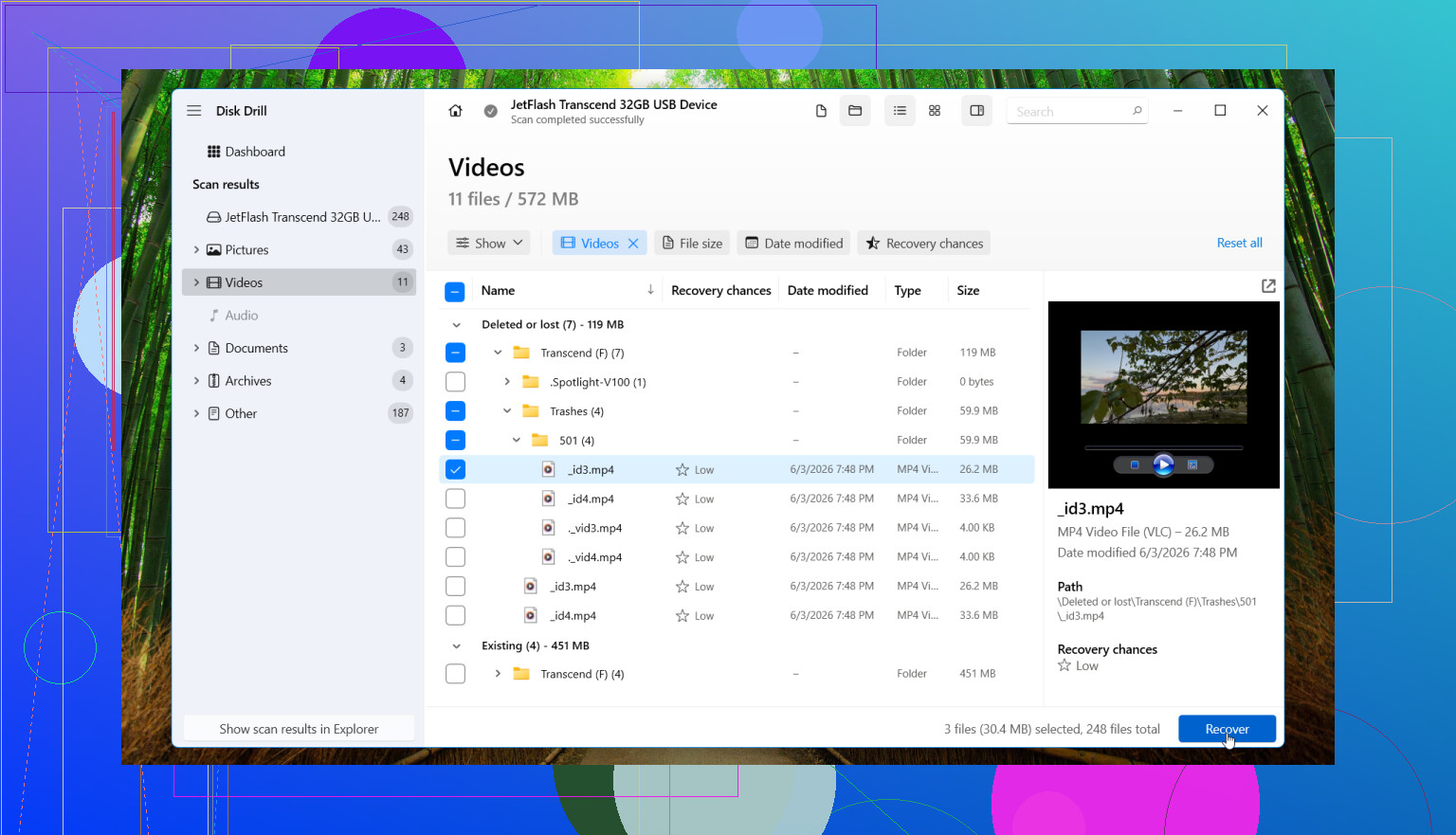
- Open Disk Drill.
- Select the SD card.
- Pick Advanced Camera Recovery.
- Run the scan.
- Preview the videos it finds.
- Recover the files to a different drive.
The preview part matters. If a clip previews cleanly, you’ve got a better read on whether the file is worth recovering. I like checking this before dumping a pile of junk onto another drive.
If the card throws read errors or feels unstable, I wouldn’t scan it over and over. I’d make a byte-to-byte backup first, then scan the backup instead. Less stress on the original card. Less risk too.
Mac side is the same story
If you’re on a Mac, it’s almost the same routine. Card reader, launch the app, scan, preview, recover somewhere else. Nothing fancy there.
When I’d skip software and go straight to a lab
Sometimes the smart move is to stop trying home fixes.
I’d lean toward a professional recovery service if:
- The SD card is cracked, bent, or otherwise damaged.
- No computer detects it at all.
- It disconnects during scans every time.
- It gets hot for no good reason.
- The footage matters enough that you don’t want to gamble with it.
Messing with software on a failing card sometimes makes the situation worse. Not every time, but enough times.
If this was a plain delete or format job, your odds are usuallly better than people think. If you haven’t used the card much since the footage disappeared, there’s still a solid chance you get at least some of the videos back.
3 Likes
If the footage was deleted and you did not record new clips after, your odds are still decent. The big factor is overwrite rate. On SD cards, deleted entries often vanish first, while the video data sits there until new writes hit the same blocks.
I agree with @mikeappsreviewer on stopping use of the card. Where I differ a bit is this. I would image the card first if the footage matters a lot. Don’t run 4 different scans on the original media. One clean pass to make a full copy is safer. On Windows, use USB Image Tool or HDD Raw Copy Tool. On Mac, ddrescue is the better pick if the card reads badly.
For GoPro footage, fragmentation is the pain point. Generic recovery apps often pull file names but return broken MP4s. Disk Drill is still one of the better picks here because it handles camera media better than a lot of plain file carvers. If you try it, recover to your computer or another external drive, never back to the same SD card. Preview any result you find. If a file plays in preview, your chances are way bettr.
Also check for .LRV and .THM sidecar files. They are not your full video, but they help confirm clip timing and names. If the main MP4 is damaged, tools like VLC’s repair trick or ffmpeg remuxing sometimes fix playback. Not always, but I’ve seen it save half-broken GoPro clips.
If you want a quick read on options, this page covers top-rated SD card video recovery tools in plain english:
best SD card video recovery software for deleted GoPro footage
If the card disconnects, shows 0 bytes, or gets hot, stop there. That’s lab territory, not home-recovery stuff.
If it was a straight delete and you stopped using the card, you still have a real shot. I mostly agree with @mikeappsreviewer and @suenodelbosque, but I’m a little less sold on trying every “repair” prompt the camera throws at you. Sometimes that helps, sometimes it just writes more junk to the card. For me, less touching = better.
What I’d add is this:
- Check whether the missing clips were split into chapters. GoPro often breaks long recordings into multiple files, so people think footage is gone when only one segment vanished.
- Look for hidden files on the card. Sometimes the directory is messed up, not fully gone.
- If you recover files and they won’t play, don’t assume they’re dead. A remux with ffmpeg can fix some recovered GoPro MP4s way more often than people expect.
- Test the SD card after all this. Fake or failing cards cause a ton of “deleted footage” drama.
For software, Disk Drill is a solid place to start for GoPro deleted footage recovery because it tends to do better with camera video than a lot of generic undelete apps. I’d still recover to a different drive, obviously. Kinda basic, but people still mess that up.
Also worth reading: Reddit tips for recovering deleted GoPro and SD card videos
If the card shows 0 bytes or keeps dropping out, stop DIY stuff. That’s where home recovery gets real dumb real fast.
One thing I’d push back on a bit: I would not rely on the GoPro itself to “repair” anything unless the footage is already considered expendable. Cameras are built to keep shooting, not to do careful forensic recovery.
A couple extra checks that complement what @suenodelbosque, @andarilhonoturno, and @mikeappsreviewer already covered:
- Try reading the card on Linux if Windows or macOS acts weird. Sometimes a card mounts there long enough to copy the DCIM folder manually.
- If you recover MP4 files that will not open, inspect them with MediaInfo. If duration is blank or metadata is missing, the video payload may still exist and just need a header transplant or remux.
- GoPro chapter files can trick people. The “deleted clip” may actually be one missing segment out of GX01, GX02, etc.
About Disk Drill specifically:
Pros
- Good with camera media and fragmented video
- Preview is useful before recovery
- Friendly interface, less chance of user error
Cons
- Not magic if the card has physical issues
- Deep scans can return lots of junk names
- Paid recovery for full use may not suit everyone
If Disk Drill finds pieces but playback is broken, save everything anyway. Partial recovery is common with action cam footage, and damaged clips can sometimes be rebuilt later. If the card capacity suddenly looks wrong, like 32 GB showing as a few MB, that points more to controller failure than simple deletion. That’s when I’d stop DIY.