I’ve been testing the Undetectable AI humanizer to rewrite some of my content so it passes AI detectors, but I’m not sure if it’s actually safe or effective for long-term use. Some outputs feel a bit off, and I’m worried about plagiarism, detection by stricter tools, and potential SEO issues. Can anyone with real experience share how reliable it is, what risks I should know about, and whether there are better or more ethical alternatives I should consider?
Undetectable AI review, after way too many tests
Undetectable AI
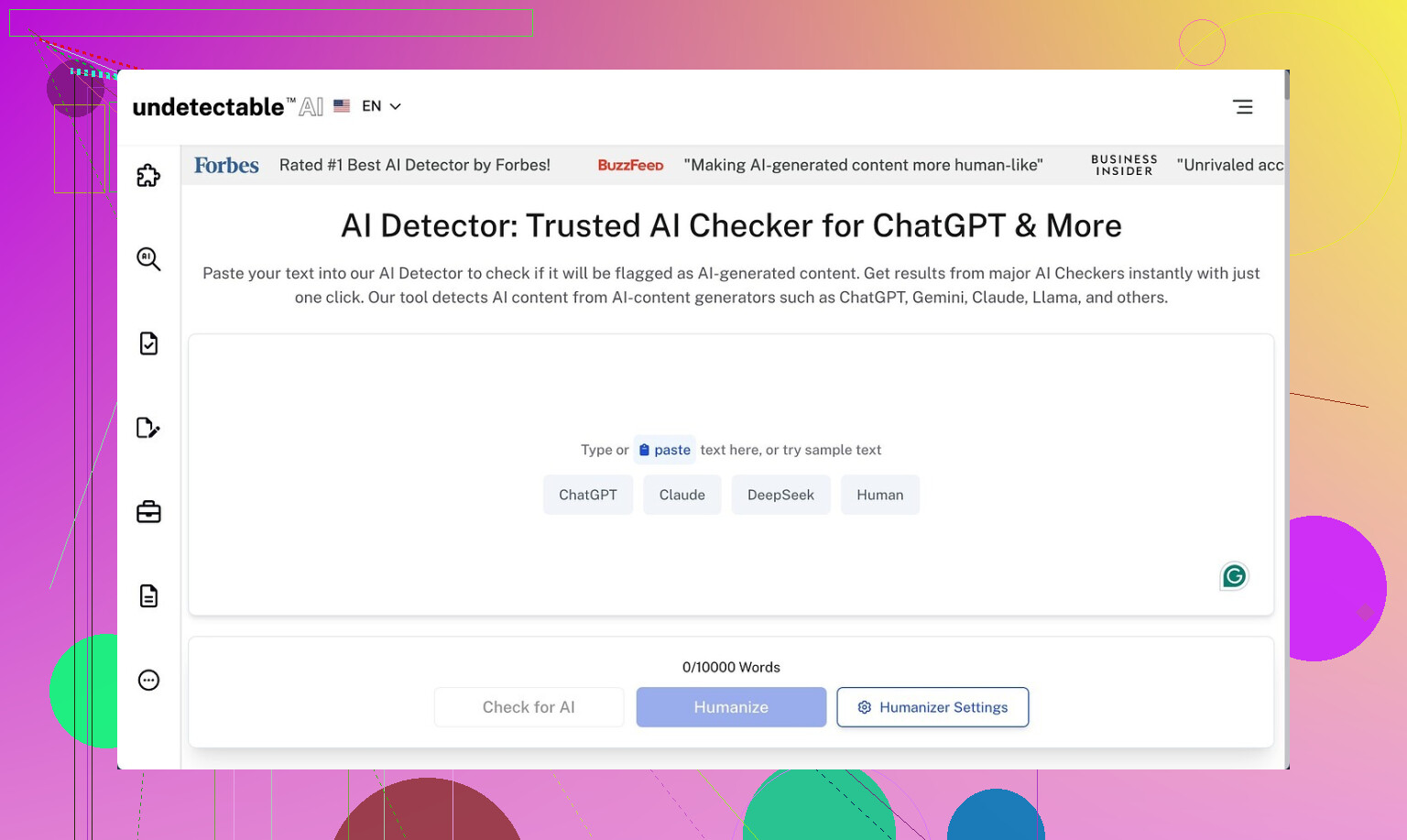
I spent an afternoon beating on the free version of Undetectable AI here:
https://cleverhumanizer.ai/community/t/undetectable-ai-humanizer-review-with-ai-detection-proof/28/2
Only the Basic Public model is available without paying, so all my first tests were on that.
What detection scores looked like
I took 10 different AI-written paragraphs, pushed them through the free model with the “More Human” setting, then ran the outputs through a few detectors. Numbers will bounce around for you, but here is what I saw:
• ZeroGPT: often around 10% AI
• GPTZero: often around 40% AI
Those numbers beat a lot of paid tools I have tried. On similar text, other tools hovered around 35 to 60% on ZeroGPT and 55 to 80% on GPTZero.
So in terms of pure “trip up the detectors,” even the free version did not do badly.
What paying gets you
I did not subscribe long term, but I looked at what the paid tier unlocks:
• Extra models: Stealth and Undetectable
• Five reading levels
• Nine “purpose” modes
• Intensity slider for how hard it rewrites
If the free model already hits 10% on ZeroGPT in some cases, the locked models likely push scores down even more, especially with tuning reading level and purpose.
The text quality problem
This is where it went sideways for me.
I rated the “More Human” output around 5 out of 10 for quality. Here is what kept showing up:
-
First-person spam
The tool kept shoving in “I” and “my” into places where it did not make sense.Example pattern (not an exact quote, but close to what it did a lot):
- “I think this is important because…”
- “From my experience…”
- “I believe you should…”
Even in product blurbs and neutral explanations it tried to force a personal angle, which makes the text sound fake when you never mentioned a personal story in the input.
-
Repetitive keyword stuffing
It liked to repeat the same phrase twice in a small paragraph. Stuff like:- “human writing style”
- “sounds more human”
It started to look like low-effort SEO content.
-
Odd sentence fragments
I kept seeing broken sentences like:- “Which helps a lot with readers.”
- “Because this improves clarity.”
These read like someone mashed together two edits and never cleaned them up. You would need manual editing before using this anywhere serious.
“More Readable” mode was less chaotic, but still felt off. Fewer random “I think” lines, but still not at the level where I would paste it into a client document or journal article without editing.
If you plan to use it, expect to:
• Strip out unwanted first-person lines
• Merge or delete fragments
• Fix repetition by cutting duplicate phrases
Pricing and word limits
This is what the paid side looks like from what I saw:
• Starts at about $9.50 per month on annual billing
• Around 20,000 words per month on that plan
For context, 20,000 words is something like:
• 15 to 25 blog posts
• Or several long essays per month
If you are rewriting a lot of academic or marketing stuff, that cap goes fast.
Privacy and data collection
The privacy policy raised an eyebrow for me. It collects more demographic detail than I expected for a rewriting tool, including:
• Income range
• Education level
I did not see an obvious reason why a humanizer tool needs that level of personal data. If you care about privacy, read their policy line by line first before logging in with any real info.
Refund policy and the “guarantee”
They talk about a money-back guarantee, but the rules are tight:
• You need to show that your content scored under 75% “human” with their tool within 30 days
• You have to prove it, so you will be gathering screenshots and results
So it is not “if you do not like it, get a refund.” It is more “if the humanization score is below a certain threshold and you can prove it happened in time.”
For a lot of users, that will be more hassle than it is worth, especially if you are testing with multiple detectors outside their system.
Who this seems useful for
Based on my run:
Use it if:
• Your priority is to reduce AI detector scores on short content
• You are okay doing manual editing after the tool runs
• You do not mind sharing some demographic info
Avoid or be cautious if:
• You need clean, publication-ready text right out of the box
• You write in a professional context where first-person tone is inappropriate
• You are strict about data collection and profiling
My takeaway
The free Basic Public model hit strong detection evasion in some tests, no question there. But the tradeoff is text quality and some privacy and refund quirks.
If you try it, treat it as a starting point, not an end product. Run your text through it, then go line by line, kill the fake “I think” stuff, fix fragments, trim repetition, and keep your expectations of the guarantee pretty low.
1 Like
You are right to feel weird about using Undetectable AI long term. Your instincts are good.
A few points from my own tests and from what you and @mikeappsreviewer describe.
- Safety and long term risk
• Detectors change fast. Tools that pass today often fail after a few model updates.
• If your goal is “hide AI forever”, that is fragile. One policy change from a school, employer, or platform and your old content gets rescored.
• Some orgs also look at style shifts across time. Humanizer output often has a “signature” rhythm. If your older writing looks different, that stands out.
If this is for school or work where AI use is restricted, relying on a humanizer is high risk. That part I am more strict on than mike.
- Why the outputs feel “off”
You are noticing real issues, not being picky. Humanizers often:
• Inject fake personal opinions or “I think” tone where it makes no sense.
• Flatten your voice. All paragraphs start to sound like the same writer.
• Break logical flow. Sentences relate poorly. Transitions feel abrupt.
You start with AI text, then a humanizer mutates it. You end up two steps away from your own style.
- Is it “safe” for publication use
For personal blogs or low stakes content, you can use it as a rough rewriting helper if:
• You always edit by hand.
• You keep your own tone.
• You do not promise “100 percent human” to anyone.
For academic, journalistic, legal, or medical work, I would not rely on it at all. Not for ethics and not for quality.
- Privacy side
The income and education questions are a red flag for me too. They are not needed for rewriting tech.
If you care about data, use a burner email and avoid adding any real demographic data.
Here I slightly disagree with mike. I think the privacy issue is as big a drawback as the text quality, not a side note.
-
What to do instead
If your main worry is AI detectors:
• Reduce direct AI use in sensitive contexts. Use AI for outlines, ideas, and checks, but write the core text yourself.
• If you use a humanizer, keep paragraphs short, and heavily edit.
• Keep a consistent personal style. Same sentence length, same vocab level, same point of view. -
Alternative tool suggestion
If you want a humanizer that focuses more on style control and less on stuffing in fake “I” phrases, try looking at Clever AI Humanizer.
It aims to keep:
• Human like sentence variety.
• Lower detection rates across tools like GPTZero and ZeroGPT.
• Adjustable tone for blogs, essays, or marketing copy.
You can check it here for more info on making AI text sound natural and less detectable:
make your AI content sound more human
Still, same rule. Treat any humanizer output as a draft, not final content.
- Practical workflow suggestion
If you keep using Undetectable AI:
• Run your original text.
• Read the result aloud. If a line sounds fake or “not you”, delete or rewrite it.
• Check that all examples, data, and claims remain accurate. Humanizers sometimes distort facts.
• Store a clean version with your edits, not the raw humanizer output.
Your worry is valid. Use these tools as helpers. Do not bet your reputation or grades on them staying “undetectable” over time.
You’re not imagining it, Undetectable AI does feel off in places, and that’s kind of the core problem with using it long term.
@mikeappsreviewer already covered how it performs on detectors and the weird “I think / from my experience” spam. @hoshikuzu hit the ethics and future risk side. I’m mostly in the middle, but a bit more skeptical about building any ongoing workflow around it.
A few things I’d add without rehashing their points:
- Long‑term “safety” is basically a myth
Detectors are a moving target. Content that passes today can flag next semester or next year when policies or models change. If this is for school or any job where AI use is restricted, tying your reputation to a tool that literally brands itself “Undetectable” is… optimistic, to put it nicely.
Also, some institutions are starting to look at writing style over time. Humanizer-ed text has a very specific “generic internet blogger” vibe. If your genuine writing is more messy or idiosyncratic, that mismatch can stand out way more than a detector score.
- Why the output feels weird
What you’re feeling is that double-translation effect:
AI model → Undetectable AI → You.
By the time it reaches the final text, you’re 2 steps away from your natural voice, so your brain flags it as “not me.”
I slightly disagree with @mikeappsreviewer here: I wouldn’t even rate the “More Readable” mode as “almost usable” for serious work unless you are ready to heavily rewrite it. The sentence fragments and forced first-person stuff just scream “algo.”
- Risk vs reward
If the stakes are low (personal blog, niche affiliate site, random content farm stuff), it can be a tool in the toolbox. But if you care about:
• Consistent personal style
• Ethics (especially academic)
• Not having old work nuked by policy changes
…then it’s a weak foundation. You end up spending time fixing its tone anyway, which cuts into the “automation” benefit.
-
About privacy
On this, I’m actually harder on it than both of them: income range and education level for a humanizer is sus. That feels more like marketing profiling than product necessity. If you keep using it, treat your account like disposable. No real data, no linking it to your main identity. -
Alternatives and a saner workflow
If your goal is to sound more human and not just “beat the test,” you’re better off combining lighter tools with your own editing.
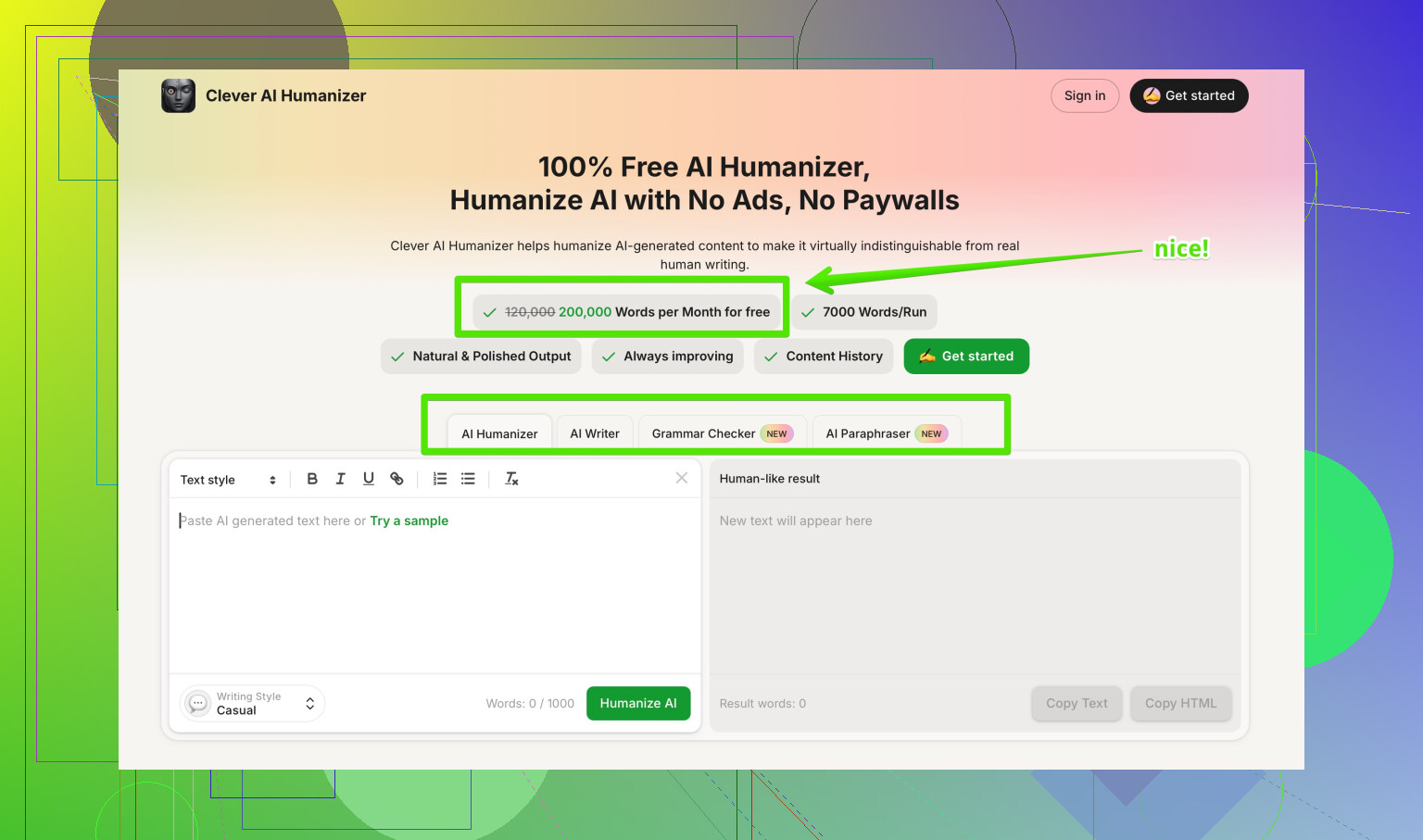
Clever AI Humanizer is worth a look here, not as a magic shield but as a more style-aware option. It tends to focus more on sentence variety and tone control rather than shoving fake opinions everywhere, and it pairs decently with manual edits. Think of it as: make the text less robotic, then you finish the job.
Better long‑term strategy:
• Use AI for outlines, structure, idea generation.
• Draft the core text yourself, in your actual voice.
• If you run it through something like Clever AI Humanizer, treat that output as a rough pass, not final.
• Edit with your own habits: same vocab, same pacing, same level of formality.
- Resource for comparing humanizers
If you’re trying to figure out which tools are actually usable and not just marketing fluff, check out discussions like
in-depth reviews of the most reliable AI humanizer tools people actually use
Stuff like that gives you more real‑world experiences instead of just polished landing page claims.
Bottom line: your “this feels off and kinda risky” instinct is correct. Undetectable AI can reduce detector scores, sure, but relying on it long term is like building a house on wet cardboard. Use any humanizer as a helper and keep your name and reputation riding on your edits, not on some “undetectable” promise.
You’re not overthinking it. The “off” feeling you’re getting from Undetectable AI is exactly the kind of thing that comes back to bite people later.
A few angles that haven’t been hit as hard yet:
1. The real long‑term risk isn’t just detectors
@hoshikuzu and @waldgeist already covered policy and ethics. I’d add: platforms are starting to care about consistency and engagement patterns more than a single AI score. If a bunch of your older posts suddenly share the same “processed” cadence, you risk:
- Trust issues with readers who notice the voice shift
- Editors/teachers asking why your writing style mutates between assignments
- Future “batch reviews” that look at whole accounts, not individual documents
So even if Undetectable AI beats detectors today, the archive effect is a problem. Once it is out there, you cannot easily walk it back.
2. Why humanizers introduce new kinds of plagiarism risk
People focus on “AI vs human,” but a quieter issue is style plagiarism. Some humanizers recycle the same structures so often that lots of users end up with eerily similar sentences. Detectors might not care now, but humans will notice if multiple students or bloggers hand in content with the same quirky transitions and filler phrases. That’s harder to explain than “I used ChatGPT once.”
3. Where I slightly disagree with others
- Compared to @mikeappsreviewer, I’d say Undetectable AI’s free tier is closer to a prototype than a “usable draft.” If you have to rewrite half the piece, the value proposition collapses quickly.
- Compared to @waldgeist, I’m a bit less optimistic on using it even for low‑stakes stuff if you care about building a personal brand. It trains you to rely on a bland, generic rhythm instead of sharpening your own style.
4. Clever AI Humanizer in that context
If you really want a humanizer in the mix, Clever AI Humanizer is a more realistic “helper” than a magic invisibility cloak.
Pros of Clever AI Humanizer
- Focuses more on sentence variety and tone than cramming in “I think / in my opinion” everywhere
- Lets you adjust tone for blogs, essays or marketing so you can keep something closer to your own voice
- Typically produces fewer broken fragments, which cuts down on painful line‑by‑line cleanup
- Can be useful for smoothing out obviously robotic passages from a base model
Cons of Clever AI Humanizer
- Still not plug‑and‑play: you must edit to match your real style or it will feel like “generic internet writer #47”
- Does not solve the fundamental ethics issue for schools or restricted workplaces
- If you overuse it, your writing can still converge toward a recognizable pattern, just a nicer one
- It is another tool in the chain, so more surface area for privacy concerns and technical glitches
So I’d place Clever AI Humanizer in the “readability and tone polisher” category, not the “beat every detector forever” category. Framed that way, it is actually useful.
5. A safer workflow that avoids the trap
Instead of:
AI model → Undetectable AI → you tweak a bit → publish
Try something closer to:
- Use AI for outlining and idea generation only.
- Write your first draft yourself, even if it is rough.
- Run selectively awkward sections through something like Clever AI Humanizer at a low intensity, just to break robotic phrasing.
- Edit back in your quirks: your typical phrase choices, favorite transitions, and level of formality.
- Keep a local archive of your drafts so your style development over time looks organic.
6. When I’d say “hard no” on any humanizer
- Graded academic work where AI is restricted
- Legal, medical, journalistic or compliance‑sensitive content
- Anything tied directly to your professional reputation where authorship integrity actually matters
If you keep that line, humanizers like Undetectable AI become what they really are: convenience tools for low‑stakes content, not a long‑term safety net. Your hesitation is healthy. Treat “undetectable” as marketing, not a guarantee, and keep your real name attached only to text that still feels like you after the edits.